@pedja stephenson gets mixed reviews on reddit. i’ll check him out as well as the other guy, thanks!
I think the only Stephenson I have read is Cryptonomicon. I enjoyed it when I read it years ago. It was slow to start. I liked the jumping back and forth between the WWII era and the current (at the time of publishing) era.
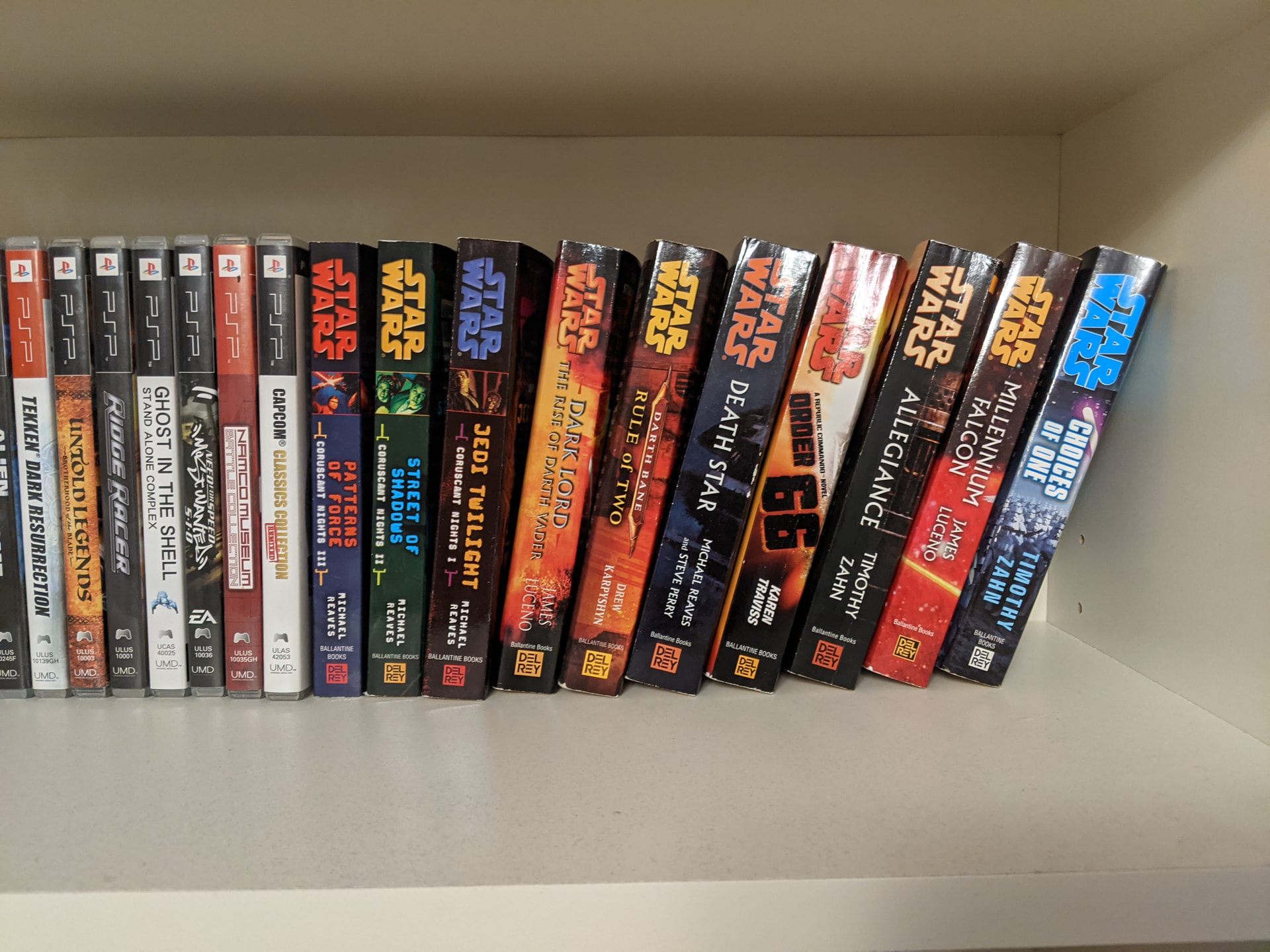
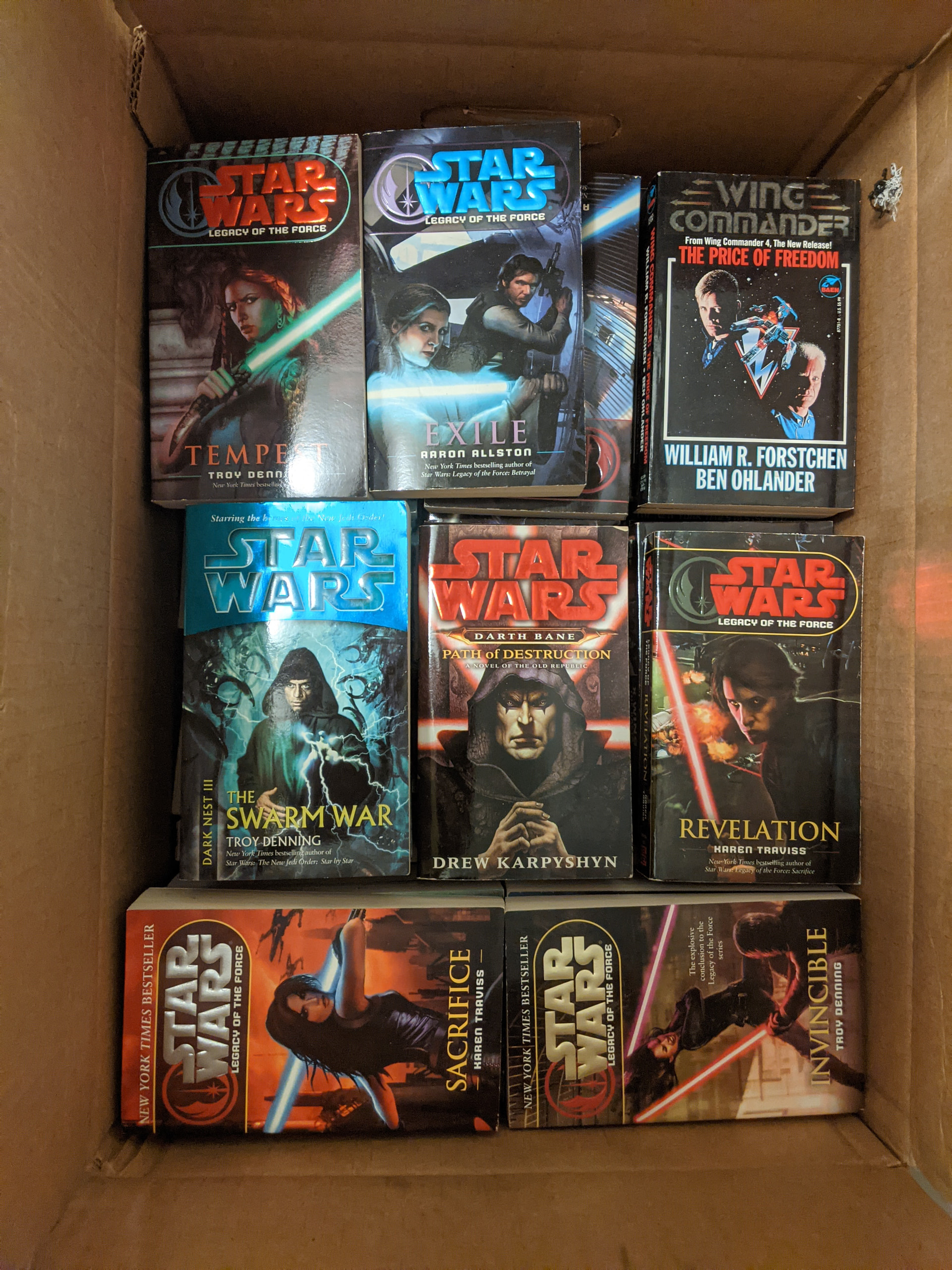
@Frederick_Law Thrawn was written by Timothy Zahn who wrote (imo) the best series outside the original movies- heir to the empire. i will have check out the others you have posted up there.
@CarrieIves just bought it, gonna start listening now.
I just want to read the stories. Doesn’t matter what it is or who wrote.
Was looking at those teen versions …..

When I think of Crichton, I think of Clancy. But that’s more about them being in the same era than the same style. I’m not sure they how well the cold war centric novels would land in 2025, especially if you didn’t grow up at the end of the cold war. (Yes, I’ve sat under my school desk with my head between my knees thinking that would somehow help during a nuclear explosion.)
The new Emperor will give them lots of new ideas for books.
What we gonna call this era we’re in now?
I read “Splinter of the mind’s eye” back before they released “The Empire Strikes Back.” That is the limit of my expanded universe.
@SPerman i’ve never actually read clancy, but i’d be willing to try him. he’s always seemed too military for me. mc was all over the place with his writing which i think is one of the reasons i like it.
the dune series is good for anyone who likes star wars. it’s almost like lucas read that and then made a movie out of it… the second book sucks, it’s so slow but it’s needed for context.
The Hunt for Red October is a great introduction to Clancy.
Don’t forget that your local library can be a good resource for e-books and audio books. Ours uses Libby and Hoopla.
Of the top books I read last year, these stood out and some of y’all might like them.
James by Percival Everett - Mostly Huck Finn retold from Jim’s perspective
A Sorceress Comes to Call by T. Kingfisher - spooky fantasy
Night Watch by Terry Pratchett - Disc World with Sam Vimes.
The Adventures of Mary Darling by Pat Murphy - The mother of Wendy, John, and Michael goes to rescue them after Peter Pan kidnapped them
The Calculating Stars by Mary Robinette Kowal - an alternate history with the space program being international and more critical
I’m starting off the year with a re-read of Factfulness by Hans Rosling, Ola Rosling, and Anna Rosling Ronnlund - I highly recommend this one if you haven’t read it before.
Dungeon Crawler Carl by Matt Dinniman was good. I have heard from several people that they really enjoyed the audiobook
I have also. Do you know why we put our heads between our knees? It was so that in the event of a nuclear bomb we would be in the proper position to kiss our butts goodbye.
For whatever reason, I’ve started reading the Agatha Christie Hercule Poirot series.
Started with “The Mysterious Affair at Styles”, then read “Death on the Nile”.
Next is “Murder on the Links”.
I’ll read them in order of publishing henceforth.
My library has most of them, Libby is your friend.
Same thing for me this last year, Doobes. I did all the Poirot and Marple books.
The availability of “Death on the Links” popped up this morning in Libby.
Comparing the styles of Dashiell Hammett (Maltese Falcon, et al) and Agatha Christie has been interesting. Hammett introduced new characters in a very linear fashion virtually throughout the novel. Christie tends to throw then all in in the first chapter. When I started reading “The Mysterious Affair at Styles”, the first chapter or two were a jumble of introduced characters, and I would be lying if I said I remembered all of them.
It wasn’t until Poirot showed up in the 3rd Chapter that things unfolded for me.
I had gotten out of the habit of reading complete novels. Reading a WSJ article recently, they were discussing the fact that fewer and fewer people are reading complete novels anymore thanks, mostly, to social media. This was of grave concern as reading complete novels trains the brain to think in very distinct ways, which are beneficial for future usage.
The piece discussed that the introduction of complete works of written literature, in the 19th century, was the cornerstone of modern society in which peoples’ thought patterns got significantly more complex and capable.
I hadn’t read a complete novel in some time, and recognized that as I’m aging, this ability was dwindling.
cheers
I’m in the the middle of The Mysterious Case of Rudolf Diesel, by Douglas Brunt. It is very interesting to see how he developed personally and professionally. We get to learn a bit of history, too.
Highly recommend. 
@doobes did you raid my mom’s book shelf? she loved agatha. are they any good?
i’ve gotten into james michener. quite dry and long, but i like the time period story telling
You might like Richard Osman’s “Thursday Murder Club” series.
The premise is: a group of people, from different backgrounds, are bored in the retirement home, so they start a ‘murder’-solving’ club 
There was recently a movie made based on the 1st book in the series, but haven’t watched it yet.
As for what I am reading ATM, it’s a ‘mix’ of Discworld’s ‘The Watch’ books, Rushdie’s ‘Midnight Children’ (one of my favourite books, but somehow I never read the original, only a (spectacular) Serbian translation), and some semi-random tech books.
What can I say, I have (way too) many interests
I just listed to “Dark Thicket” by Elmer Kelton. Have you read that one? Is it typical of his writing style? And less than a year to get to actually get to one of them. It was one of the few audiobooks available through Libby and the libraries I have cards for.